

A well-functioning sprinkler system is essential for maintaining a lush, green lawn and thriving garden. When issues arise, even the smallest malfunction can lead to dry patches and wasted water. Understanding the common problems and repair techniques can save time and money while ensuring a healthy landscape.
From broken sprinkler heads to faulty timers, various factors can disrupt the efficiency of a sprinkler system. Identifying these issues early on is crucial for effective repair. With a bit of knowledge and the right tools, homeowners can tackle many repairs themselves, restoring their system to peak performance.
Importance of Sprinkler System Repair
A well-maintained sprinkler system is essential for sustaining a flourishing lawn and garden. Timely repairs ensure efficiency and longevity, protecting the investment made in landscaping.
Benefits of Timely Repairs
- Increased Efficiency: Timely repairs enhance water distribution, preventing areas of overwatering or underwatering.
- Cost Savings: Addressing issues early reduces water bills by minimizing waste, leading to lower utility costs.
- Prolonged Equipment Life: Maintaining components such as valves and heads prevents premature wear, extending the life of the entire system.
- Improved Plant Health: Consistent irrigation ensures that plants receive adequate hydration, promoting growth and vitality.
Consequences of Neglecting Repairs
- Water Waste: Leaks or broken heads lead to significant water loss, raising environmental concerns and increasing expenses.
- Reduced Performance: Faulty systems may provide inadequate coverage, resulting in unhealthy and unsightly landscape areas.
- Expensive Damage: Delaying repairs can lead to more severe issues, requiring costly replacements rather than simple fixes.
- Pest Infestations: Unattended, poorly functioning systems can create ideal conditions for pests, harming plants and overall garden health.
Common Sprinkler System Issues
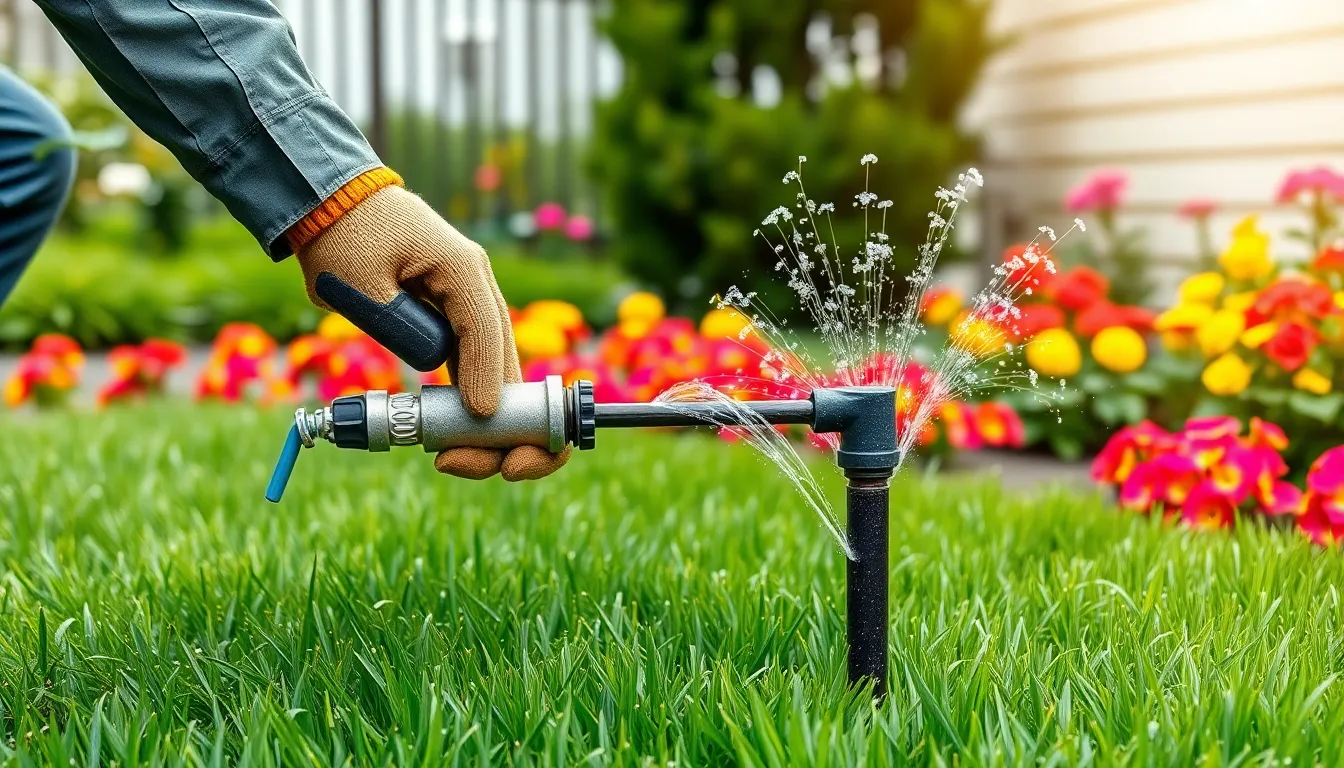
Sprinkler systems can encounter several common issues that affect their performance. Early detection and repair enhance system efficiency and save resources.
Leaky Pipes
Leaky pipes disrupt water distribution and lead to significant water waste. It’s essential to inspect pipes regularly for visible signs of leakage, such as water pooling around the system or wet spots in the landscape. Repairing damaged sections or replacing worn-out joints often solves leaks effectively. Monitoring water bills can also highlight unusual increases that may indicate hidden leaks.
Broken Sprinkler Heads
Broken sprinkler heads can cause uneven watering and dry patches in the landscape. Inspect for cracks, debris blockage, or misalignment regularly. Replacing broken heads ensures even coverage and prevents over-watering in some areas. Choosing the right head type, such as rotating or fixed, based on the landscape’s needs optimizes irrigation efficiency.
Poor Water Pressure
Poor water pressure affects the overall performance of the sprinkler system. Insufficient pressure can result from clogs in filters or pipes, improper valve settings, or an undersized water supply line. Checking and cleaning filters, adjusting valves, or consulting a professional about upgrading the water line can remedy these issues. Regular maintenance ensures optimal performance and even distribution of water to the entire landscape.
DIY Sprinkler System Repair Techniques
Homeowners can easily tackle many sprinkler system repairs with the right techniques and tools. Performing repairs not only saves money but also helps maintain an efficient irrigation system.
Tools Needed
- Screwdriver: A flathead or Phillips screwdriver for removing sprinkler heads and adjusting components.
- Socket Wrench: A socket wrench set to loosen or tighten various fittings and connectors.
- Pliers: Pliers for gripping and turning stubborn parts, especially in tight spaces.
- Teflon Tape: Teflon tape for sealing threaded connections to prevent leaks.
- Utility Knife: A utility knife for cutting pipe or hose to size as needed.
- Garden Trowel: A trowel for digging around buried parts, like valve boxes or pipes.
- Wire Cutters: Wire cutters for snipping and connecting electrical wires in automated systems.
- Drill: A power drill for creating holes or securing new sprinkler heads in place.
Step-by-Step Repair Guide
- Identify the Problem: Begin with a visual inspection of the system. Look for leaks, broken sprinkler heads, or signs of poor water pressure.
- Turn Off the Water Supply: Shut off the main water supply to prevent any further leaks or water waste during repairs.
- Replace Broken Heads: Remove broken sprinkler heads by unscrewing them from their fittings. Install new heads by hand-tightening them and using Teflon tape for a secure seal.
- Repair Leaky Pipes: Locate the leak by listening for hissing sounds or inspecting wet areas. Cut out the damaged section and replace it with a new piece, ensuring a tight fit with connectors.
- Adjust Timer Settings: Check the timer to ensure it’s programmed correctly. Adjust settings based on seasonal watering needs to improve efficiency.
- Test System Functionality: Turn on the water supply and activate the system. Observe for any additional leaks or broken heads before finalizing repairs.
- Maintain Regular Inspections: Perform routine checks of the entire system to catch any problems early and keep the sprinkler system running smoothly.
Professional Sprinkler System Repair Services
Professional repair services offer expertise for complex sprinkler system issues that DIY efforts may not resolve. When efficiency and precision matter, hiring a professional becomes a favorable option.
When to Hire a Professional
Homeowners should consider hiring a professional for significant problems. Complex issues such as extensive leaks, major component failures, or system design flaws often require specialized knowledge and equipment. Additionally, when time constraints exist or safety concerns arise, professionals provide efficient solutions. Experts can diagnose issues accurately, ensuring repairs are conducted to industry standards, which enhances system effectiveness.
What to Expect from the Service
Professional sprinkler repair services typically include thorough system inspections and diagnostics. Experts assess the entire system for potential issues, offering detailed explanations of repairs needed. Technicians usually arrive equipped with specialized tools to address multiple problems on-site, such as pipe replacements or timer adjustments. Timely repairs can significantly enhance system performance, prolong equipment lifespan, and promote healthier gardens and lawns. After repairs, professionals often provide guidance on maintenance practices to ensure long-term system efficiency.
Maintenance Tips for a Healthy Sprinkler System
Regular maintenance ensures a healthy sprinkler system, which leads to efficient water usage and vibrant landscapes. Incorporating key maintenance practices enhances long-term performance and reduces the likelihood of costly repairs.
Regular Inspections
Conduct regular inspections at least twice a year to identify potential issues before they escalate. Check for broken sprinkler heads that can obstruct water flow. Inspect pipes for leaks and signs of wear, as small leaks can lead to significant water waste. Evaluate the coverage area to ensure each section of the lawn receives adequate irrigation. Additionally, test the system’s pressure to confirm optimal performance. During inspections, note any irregularities for prompt attention.
Seasonal Adjustments
Make seasonal adjustments to optimize water distribution throughout changing weather conditions. In spring, increase watering schedules as plants emerge and temperatures rise. During summer months, consider using timers to avoid overwatering during peak temperatures, which can lead to evaporation. In fall, reduce watering frequency as plant growth slows. Winter preparations involve draining the system and insulating exposed pipes to prevent freezing. By adjusting the system for seasonal needs, homeowners maintain plant health while conserving water.
Maintaining a functional sprinkler system is essential for a thriving landscape. Homeowners who address repairs promptly not only save money but also enhance the health of their plants. By staying vigilant and conducting regular inspections, they can catch issues early and ensure efficient water distribution.
Whether opting for DIY fixes or seeking professional assistance, taking action on repairs is crucial. Ignoring problems can lead to wasted resources and costly damage. Ultimately, a well-maintained sprinkler system contributes to a vibrant garden and a more sustainable approach to landscaping. Investing time in repairs and maintenance pays off with a flourishing outdoor space.


