Table of Contents
ToggleIf you own or manage a commercial property, your HVAC system is one of the most critical, and expensive, pieces of equipment you’ll maintain. Unlike residential units, commercial systems handle higher loads, run longer hours, and face tougher conditions. Skipping routine maintenance isn’t just inconvenient: it’s costly. Breakdowns during peak seasons can shut down operations, upset tenants, and rack up emergency repair bills. Regular commercial HVAC maintenance services keep systems running efficiently, extend equipment life, and help you avoid the kind of surprise failures that can cripple a business. This guide walks through what these services include, why they matter, and how to choose the right provider for your property.
Key Takeaways
- Commercial HVAC maintenance services include scheduled inspections, filter replacement, coil cleaning, refrigerant checks, and electrical testing to keep systems running efficiently and prevent costly breakdowns.
- Regular maintenance reduces energy costs by 15-30%, extends equipment lifespan from 10 years to 15-20 years, and ensures tenant comfort and code compliance for commercial properties.
- Most commercial buildings should schedule HVAC maintenance twice yearly (spring and fall) for rooftop units, quarterly for chillers, and monthly inspections for high-demand environments like restaurants or healthcare facilities.
- Choosing a licensed, EPA-certified HVAC repair commercial contractor with experience matching your specific equipment type and offering documented service reports protects your system investment.
- Well-maintained HVAC systems deliver a return on investment of 200-300%, saving 15-30% on energy costs, reducing emergency repairs by 40-50%, and deferring major capital replacement by years.
What Are Commercial HVAC Maintenance Services?
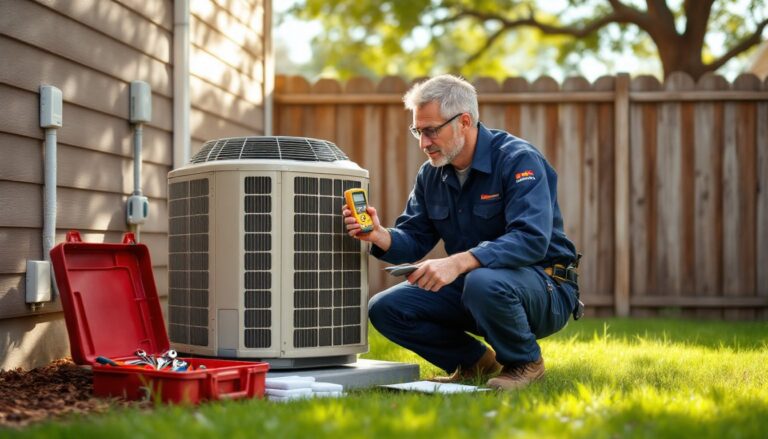
Commercial HVAC maintenance services are scheduled inspections, tune-ups, and repairs performed by licensed technicians to keep heating, ventilation, and air conditioning systems in commercial buildings operating at peak performance. These aren’t the quick filter swaps you might do at home. Commercial systems, rooftop units (RTUs), chillers, boilers, air handlers, variable refrigerant flow (VRF) systems, require specialized knowledge and equipment.
A typical maintenance visit includes:
- Filter replacement or cleaning to maintain airflow and indoor air quality
- Coil cleaning on evaporator and condenser coils to maximize heat transfer
- Refrigerant level checks and leak detection to prevent compressor damage
- Thermostat calibration to ensure accurate temperature control
- Belt and bearing inspection on motors and blowers
- Electrical connection testing to catch loose wires or corrosion before they fail
- Condensate drain clearing to prevent water damage and mold growth
These tasks are documented in service reports, which become part of your building’s maintenance records. Most commercial hvac repair and maintenance contracts include both routine tune-ups and priority response for breakdowns, giving property managers peace of mind and predictable budgeting.
Why Regular HVAC Maintenance Matters for Commercial Properties
Commercial HVAC systems represent a significant capital investment, often $50,000 to $500,000+ depending on building size and system complexity. Without regular maintenance, that investment depreciates fast.
Energy efficiency is the first casualty. Dirty coils, clogged filters, and refrigerant leaks force systems to work harder, driving up energy costs by 15-30%. In a 20,000-square-foot office building, that can mean thousands of dollars wasted annually. Well-maintained systems run at design efficiency, keeping utility bills in check.
Equipment lifespan depends on care. A commercial rooftop unit should last 15-20 years with proper maintenance. Neglect can cut that in half. Compressors, heat exchangers, and motors fail prematurely when dirt, wear, and minor issues go unaddressed. Replacing a major component or entire system years early is a budget disaster most property owners can’t afford.
Tenant comfort and retention matter. Uncomfortable tenants complain, leave, or withhold rent. Inconsistent temperatures, poor air quality, and noisy equipment drive people away. Regular seasonal maintenance checklists help prevent these issues before they escalate.
Code compliance and liability are real concerns. Many jurisdictions require commercial buildings to maintain HVAC systems to specific standards. Neglected systems can fail safety inspections, trigger fines, or create liability if poor air quality causes health issues. Insurance companies may also require documented maintenance to cover equipment failures.
Key Components of a Commercial HVAC Maintenance Plan
A solid commercial HVAC maintenance plan is more than a list of tasks, it’s a strategic approach to preventing downtime and maximizing system performance. Most plans are customized to the specific equipment, building use, and operating hours.
Preventive Maintenance Tasks
Preventive maintenance is the core of any commercial HVAC service contract. These are scheduled tasks performed before equipment fails, designed to catch small problems early.
Quarterly tasks typically include:
- Visual inspection of all accessible components
- Filter replacement (more frequent in dusty or high-occupancy environments)
- Thermostat and control system checks
- Lubrication of motors and bearings
- Drain pan and condensate line inspection
Semi-annual or seasonal tasks cover deeper system checks:
- Coil cleaning (both indoor and outdoor units)
- Refrigerant charge verification and leak testing
- Electrical component testing (contactors, capacitors, relays)
- Blower motor and belt inspection, adjustment, or replacement
- Combustion analysis on gas-fired heating equipment
- Economizer testing and calibration on RTUs
Annual comprehensive service includes:
- Full system performance testing under load
- Heat exchanger inspection for cracks or corrosion (critical safety check)
- Ductwork inspection for leaks, especially on rooftop or mechanical room connections
- Building automation system (BAS) integration checks
- Detailed report with recommendations for repairs or upgrades
Plans should also include priority emergency service. When a system fails at 95°F in July, you need a technician on-site within hours, not days. Most maintenance contracts guarantee response times for customers under contract.
How Often Should Commercial HVAC Systems Be Serviced?
Frequency depends on equipment type, building occupancy, operating hours, and local climate. There’s no one-size-fits-all answer, but industry standards provide solid guidelines.
Minimum recommended frequency:
- Rooftop units (RTUs) and split systems: Twice yearly, spring and fall. These tune-ups prepare heating and cooling modes for peak seasons.
- Chillers (water-cooled or air-cooled): Quarterly inspections during cooling season, annual off-season shutdown service.
- Boilers and hydronic heating systems: Annual inspection before heating season, monthly checks during operation.
- Air handlers and makeup air units: Quarterly filter changes, semi-annual belt and motor service.
- Variable refrigerant flow (VRF) systems: Semi-annual indoor unit cleaning, annual outdoor unit service.
High-demand environments need more. Restaurants, manufacturing facilities, healthcare buildings, and 24/7 operations put extreme stress on HVAC equipment. These properties often require monthly inspections and quarterly deep-service visits.
Filter change frequency varies widely. Standard 2-inch pleated filters might last 3 months in a low-occupancy office but only 3-4 weeks in a retail space with high foot traffic. MERV-13 or higher filters (common post-pandemic) clog faster and need more frequent replacement.
Many modern commercial systems have building automation systems (BAS) that track runtime hours, filter differential pressure, and equipment faults. Use these diagnostics to refine your maintenance schedule. If a rooftop unit runs 12 hours a day in a harsh desert climate, it needs more attention than one running 6 hours a day in a mild coastal area.
Choosing the Right HVAC Maintenance Service Provider
Not all hvac repair commercial contractors are created equal. The difference between a solid maintenance provider and a mediocre one shows up in system reliability, energy costs, and long-term equipment life.
Licensing and certification come first. Verify the contractor holds the appropriate state and local licenses for commercial HVAC work. Technicians should be EPA Section 608 certified for refrigerant handling. Look for NATE (North American Technician Excellence) certification, which indicates advanced technical training. For specialized equipment like chillers or VRF systems, manufacturer certifications are a must.
Experience with your equipment type matters. A contractor who specializes in residential split systems won’t have the expertise to service a 200-ton chiller or a complex building automation system. Ask for references from similar properties, office buildings, retail centers, industrial facilities, whatever matches your use case.
Response time and availability are critical. Emergency breakdowns don’t wait for business hours. Make sure the provider offers 24/7 emergency service and can commit to response times in writing. Contractor matching services can help identify providers with strong availability records.
Transparent pricing and detailed service reports separate pros from amateurs. Get written estimates that break down labor, parts, and contract terms. After each service visit, you should receive a report documenting tasks completed, issues found, and recommendations. Photos of problem areas are a bonus.
Preventive maintenance contracts vs. time-and-materials billing. Most commercial properties benefit from a contract that bundles scheduled maintenance at a fixed annual cost. This locks in pricing, ensures services don’t get skipped, and often includes discounts on repairs. Compare at least three proposals before signing. Pay attention to what’s included, filter costs, refrigerant top-offs, and after-hours service can add up if they’re billed separately.
Cost Considerations and ROI of Professional Maintenance
Commercial HVAC maintenance isn’t cheap, but neither is replacing a $15,000 compressor or losing tenants due to a week-long cooling outage. Understanding the costs and returns helps justify the investment.
Typical maintenance contract pricing for commercial properties ranges from $150 to $500 per ton of cooling capacity annually, depending on system complexity, building location, and service frequency. A 10-ton rooftop unit might cost $1,500-$3,000/year for quarterly service. A large building with multiple RTUs, a chiller, and boilers could run $10,000-$30,000+ annually.
Breakdown factors that affect cost:
- System age and condition: Older equipment needs more attention and parts.
- Accessibility: Rooftop units 40 feet up cost more to service than ground-level equipment.
- Operating hours: 24/7 facilities pay more due to higher wear and after-hours service needs.
- Filter types and quantity: High-efficiency filters and large air handler arrays add recurring costs.
Return on investment is measurable. Studies show well-maintained commercial HVAC systems deliver:
- 15-30% lower energy costs compared to neglected systems
- 40-50% fewer emergency repairs that cost 2-3x more than planned maintenance
- 50% longer equipment lifespan, deferring major capital replacement by years
For a property spending $50,000 annually on HVAC energy, a 20% efficiency gain from regular maintenance saves $10,000/year, easily covering a $5,000 maintenance contract with money left over. Add avoided emergency repairs and extended equipment life, and the ROI often exceeds 200-300%.
Don’t skip maintenance to save money in the short term. The property manager who cuts the HVAC budget in a good year will regret it when the compressor fails during the next heat wave. Reviews and service records from experienced contractors confirm this pattern, deferred maintenance always costs more in the long run.
If budget is tight, prioritize critical equipment first. A chiller serving the entire building deserves quarterly attention even if smaller RTUs get semi-annual service. Work with your contractor to phase in a comprehensive plan over 1-2 years rather than skipping maintenance altogether.