Table of Contents
ToggleTulsa sits squarely in the heart of tornado alley, where spring and summer storms bring high winds, hail the size of baseballs, and enough rain to test any roof’s limits. If your roof took a beating in the last storm, you’re not alone, Oklahoma sees some of the highest rates of wind and hail claims in the country. Acting fast matters. Water damage spreads quickly once shingles lift or flashings tear, and what starts as a missing tab can turn into rotted decking within weeks. This guide walks homeowners through spotting damage, making temporary fixes, navigating insurance claims, and hiring the right contractor without falling for storm chasers who disappear faster than the weather cleared.
Key Takeaways
- Spot storm damage roof repair in Tulsa by checking for lifted shingles, granule loss in gutters, dented flashings, and exposed nail heads from high winds and hail common to tornado alley.
- Document all damage immediately with photos and timestamps, then mitigate further water intrusion with tarps and buckets before contacting your insurance company for claim filing.
- File your storm damage claim within your policy’s timeframe (typically one year in Oklahoma), request an adjuster inspection, and avoid signing contractor agreements until the adjuster evaluates the damage.
- Hire a licensed, locally established roofing contractor with manufacturer certifications and verifiable references—avoid out-of-state storm chasers offering pressure-driven deals or deductible waivers.
- Temporary repairs like tarp installation can buy time, but structural damage, large missing shingle areas, and steep-pitch roofing require professional storm damage roof repair to prevent warranty voids and injury.
Identifying Storm Damage on Your Tulsa Roof
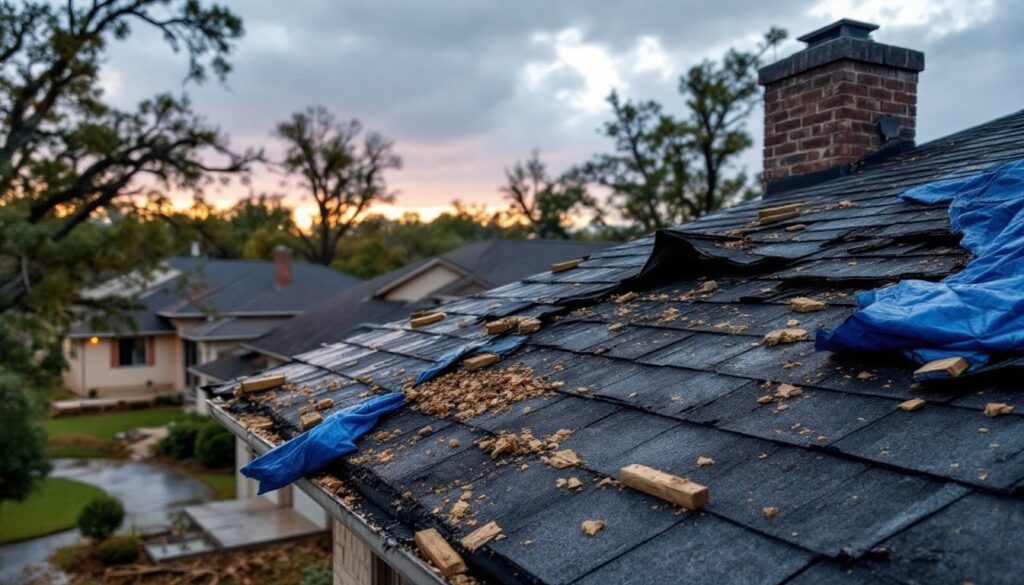
Most storm damage isn’t obvious from the ground. Homeowners often miss problems until they see a ceiling stain or feel a draft. Start with a visual inspection from ground level using binoculars. Look for lifted, creased, or missing shingles, granule loss in gutters (asphalt shingles shed granules when impacted by hail), dented metal flashings around chimneys and vents, and torn or displaced ridge caps.
If it’s safe and you’re comfortable with heights, use a sturdy extension ladder to access the roof edge. Never walk on a wet or steeply pitched roof without proper fall protection. Check valleys closely, wind-driven rain exploits any gap in these critical drainage channels. Look for exposed nail heads, lifted underlayment, or soft spots in the decking that indicate water intrusion.
Common Signs of Wind and Hail Damage
Wind damage shows up as:
- Lifted or missing shingles, especially on the windward side and roof edges where uplift forces are strongest
- Creased or folded tabs where wind bent shingles back on themselves
- Exposed fasteners or gaps in step flashing along walls and chimneys
- Damaged soffit or fascia, which suggests high wind speeds that may have also stressed roof attachments
Hail damage looks different:
- Random dents or divots in asphalt shingles, often with exposed black substrate where granules were knocked off
- Shiny spots on older shingles where impact bruised the mat
- Circular cracks in brittle, aged shingles
- Dented metal on vents, gutters, flashings, and HVAC units (if your AC condenser has dents, your roof probably does too)
- Granule accumulation in gutters and downspouts after a storm
Hail impact is cumulative, shingles may not leak immediately, but compromised granule protection accelerates UV degradation and shortens roof life. Document everything with photos, including close-ups and wide shots showing the entire roof plane. Time-stamp them if possible. These become critical evidence for insurance claims.
Immediate Steps to Take After a Storm
The first priority is safety. Don’t climb onto a damaged roof during or immediately after a storm. Wait for conditions to stabilize and check for downed power lines, unstable tree limbs, or structural damage before approaching the house.
Once it’s safe, take these steps in order:
- Document the damage immediately. Photograph the roof from multiple angles, gutters, downspouts, interior water stains, and any damaged property (siding, fencing, vehicles). Note the date and time.
- Mitigate further damage. Homeowners have a duty to prevent additional loss. If water is entering, cover the opening with a tarp secured with 2×4 boards and fasteners (not just weights, Oklahoma wind will peel an unsecured tarp off in minutes). For leaking areas, place buckets inside and move valuables away from the drip zone.
- Contact your insurance company. File a claim within the timeframe specified in your policy (usually within one year for weather events in Oklahoma, but sooner is always better). Request an adjuster inspection.
- Keep receipts. Save documentation for tarps, emergency repairs, and any temporary materials. Most policies reimburse reasonable costs to prevent further damage.
- Avoid signing contracts immediately. Storm chasers often canvass neighborhoods within hours of a storm. Don’t commit to repairs until the adjuster inspects and you’ve vetted contractors.
If the roof is actively leaking and you can’t tarp it yourself, call a local roofing company for emergency service. Expect to pay a service call fee, but it’s worth it to prevent interior damage that costs far more than the roof itself.
DIY Temporary Roof Repairs vs. Professional Help
Temporary repairs buy time until a contractor can complete permanent work, but they’re not a substitute for proper fixes. Homeowners comfortable with ladder work and basic carpentry can handle small tasks: anything structural or on a steep pitch requires a pro.
DIY-friendly temporary repairs:
- Tarp installation: Use a heavy-duty poly tarp (at least 6 mil thickness). Extend it at least 4 feet past the damaged area on all sides. Sandwich the peak edge between two 2×4 boards and screw them together to anchor the tarp over the ridge. Secure the sides and bottom with more 2x4s, screwing through the boards into roof decking (not just shingles). Avoid placing fasteners in valleys or near flashings.
- Replacing a few missing shingles: If only a couple of three-tab shingles blew off and the underlayment is intact, slide new shingles into place, lift the tabs above, and fasten with galvanized roofing nails (four per shingle). Seal the lifted tabs with roofing cement. This works for minor cosmetic damage on low slopes (4:12 or less).
- Sealing small cracks: Use roof sealant or cement to cover small splits in flashings or minor gaps. This is a band-aid, not a repair, but it prevents immediate leaks.
When to call a professional:
- Any structural damage: sagging decking, broken trusses, or compromised sheathing
- Large areas of missing shingles (more than a few square feet)
- Valley or flashing damage: these areas are critical and require proper integration with surrounding materials
- Steep pitches (8:12 or greater) where fall risk is high
- Hail damage requiring full replacement: insurers often won’t cover piecemeal repairs if the whole roof qualifies for replacement
Many reputable roofing professionals in Tulsa offer emergency tarp service and temporary repairs as part of a full claim process. It’s worth paying for that expertise rather than risking injury or botching a repair that voids your warranty.
Working with Insurance for Storm Damage Claims in Oklahoma
Oklahoma law favors policyholders in storm claims, but you still need to manage the process actively. Insurers will send an adjuster to inspect the damage, typically within a week or two of filing.
Before the adjuster arrives:
- Gather your documentation (photos, receipts, notes on when the storm occurred)
- Review your policy to understand your wind/hail deductible (often 1-2% of the dwelling coverage amount in Oklahoma, not a flat dollar figure)
- Don’t make permanent repairs yet, adjusters need to see the damage firsthand
During the inspection:
- Walk the roof with the adjuster if possible, or have a contractor you trust present (not one who knocks on your door an hour before)
- Point out all damage, including non-roof items (gutters, siding, fencing)
- Ask questions: What’s covered? What’s depreciation vs. replacement cost? What’s the claims process timeline?
Understanding the payout:
Most policies pay on a replacement cost basis but issue two checks: an initial payment for actual cash value (replacement cost minus depreciation) and a second recoverable depreciation payment after repairs are complete and you submit invoices. Don’t expect a single check that covers everything upfront.
If the adjuster’s estimate seems low, you have options:
- Hire a public adjuster (they take a percentage of the claim but can be worth it for complex or disputed claims)
- Get independent estimates from licensed contractors and submit a supplement to the insurer
- Request a re-inspection if damage was missed
Oklahoma’s statute of limitations for property damage claims is two years from the date of loss, but policies often require filing within one year. Don’t wait.
Beware of Assignment of Benefits (AOB) agreements. Some contractors ask homeowners to sign over claim rights in exchange for “handling everything.” This can lead to inflated invoicing and loss of control. According to Angi, homeowners should remain the primary contact with their insurer and never sign away claim authority without fully understanding the terms.
Choosing the Right Roof Repair Contractor in Tulsa
Storm season brings a flood of out-of-state contractors who canvass neighborhoods, often going door-to-door with urgent pitches. Some are legitimate, but many are fly-by-night operators who take deposits and disappear or do shoddy work that fails inspection.
What to look for in a contractor:
- Local, established business: A Tulsa-area company with a physical office and a track record. Check the Better Business Bureau, Google reviews, and ask for references from jobs completed in the last year.
- Oklahoma roofing license and insurance: Oklahoma doesn’t require a state-level roofing license, but reputable contractors carry general liability insurance and workers’ compensation. Ask for certificates and verify them directly with the insurer.
- Detailed written estimates: Should include material specs (shingle brand, type, and warranty), labor costs, tear-off and disposal, underlayment type (synthetic or felt), flashing work, and a timeline. Avoid vague “per square” pricing without itemization.
- Manufacturer certifications: GAF, Owens Corning, CertainTeed, and other manufacturers certify installers who meet quality standards. Certified contractors can often offer extended warranties.
- References and portfolio: Ask to see recent jobs and contact past clients. Drive by completed projects if possible.
Red flags:
- Pressure to sign immediately (“This price is only good today”)
- Requests for full payment upfront (standard is a deposit, progress payments, and final payment upon completion)
- Offers to waive your deductible (this is insurance fraud in Oklahoma)
- No physical address or local phone number
- Generic contracts with no material specifications
Get at least three estimates. They should be relatively close in price for similar materials and scope. If one bid is drastically lower, ask why, it may mean inferior materials, shortcuts, or a contractor who’ll add change orders later.
For complex installations or if you’re interested in advanced techniques, consulting resources like Fine Homebuilding can provide insights into best practices and building science principles that separate quality contractors from the rest.
Red Flags to Avoid When Hiring Storm Chasers
Storm chasers are contractors who follow severe weather events, often arriving from out of state with little intention of standing behind their work long-term. Not all are scammers, some are legitimate crews picking up overflow work, but caution is warranted.
Specific red flags include:
- Out-of-state license plates and temporary setups: Roofers working from hotel parking lots or rented trailers
- Aggressive door-to-door solicitation: Especially within 24 hours of a storm, before adjusters have even inspected
- Offering to “handle your claim” or meet the adjuster without you present: You should always be part of the conversation
- Insisting on signing contracts before the adjuster arrives: You don’t know the scope or cost yet
- Waiving deductibles or inflating claims: Both are illegal and can result in claim denial or fraud charges
- No verifiable references or online presence: If you can’t find reviews or a website, walk away
- Using scare tactics: “Your roof will collapse,” “You’ll have mold in days,” or “Insurance won’t pay if you wait”
If a contractor knocks on your door, thank them politely, take their card, and do your assignments. A good contractor won’t mind waiting while you verify credentials and check references. If they pressure you, that’s your cue to move on.